
About Sabina
Sabina grew up hearing stories around kitchen tables and at family gatherings, while others lived in silence, carried quietly across generations. Her writing begins with listening: to family histories, to silences, and to the fragments of memory that shape who we become.
Her writing explores memory, family, migration, inheritance, and belonging, often through the lens of Pakistani Pashtun Muslim American life and the quiet tensions between generations. She is drawn to the ordinary moments that reveal larger truths about love, loss, identity, faith, and home.
Sabina holds an MFA in Creative Writing from San Francisco State University, where she graduated with Distinguished Honors. Her work has appeared or is forthcoming in AGNI, SWWIM, Anomaly, FERAL, and other literary journals and anthologies. She is a member of The Authors Guild and a 2026 One Story Writing Circle participant.
Her poetry manuscript, What My Mouth Inherited, recognized under its former title, a new vocabulary, has twice been named a semifinalist for the University of Wisconsin Press’s Brittingham and Felix Pollak Prizes and was a 2024 semifinalist for the Philip Levine Prize for Poetry. Her work has also been recognized by Palette Poetry, SmokeLong, and CRAFT.
She has taught creative writing through organizations including The Writers Grotto, San Diego Writers Ink, and Litquake’s Elder Project, where she works with older adults exploring memory, story, and lived experience through writing. Whether in classrooms, workshops, or community organizations, she is passionate about helping writers deepen their craft and discover the stories only they can tell.
She is currently at work on a novel, a collection of short stories, and her debut poetry collection.
For Sabina, writing begins the way it did at her family’s kitchen table: by paying as much attention to what goes unsaid as to what is spoken aloud. She keeps returning to the same terrain: inheritance, migration, and the silences passed down like anything else in a family. She returns not to resolve these histories, but to stay with them long enough to find the shape of a story, and perhaps to give language to what might otherwise remain unspoken.
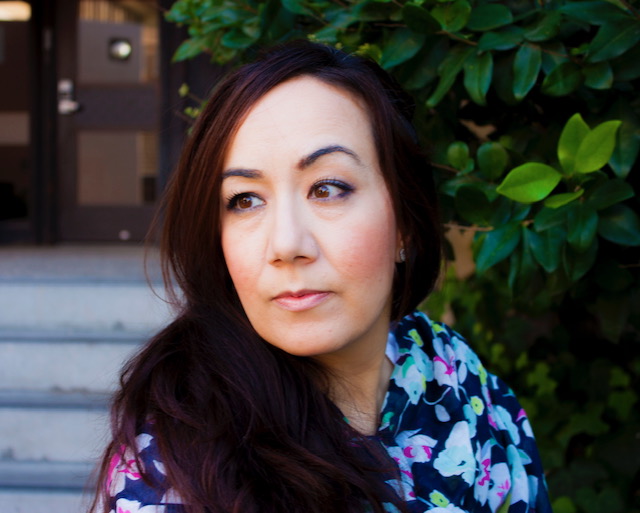
Photo: Aaisha Canelas

 Sabina Khan-Ibarra